
Mechatronics Engineering
Prepare for automation and robotics careers by blending mechanical, electronic, and programming skill sets.
Mechatronics Engineering, B.S.
 What is Mechatronics?
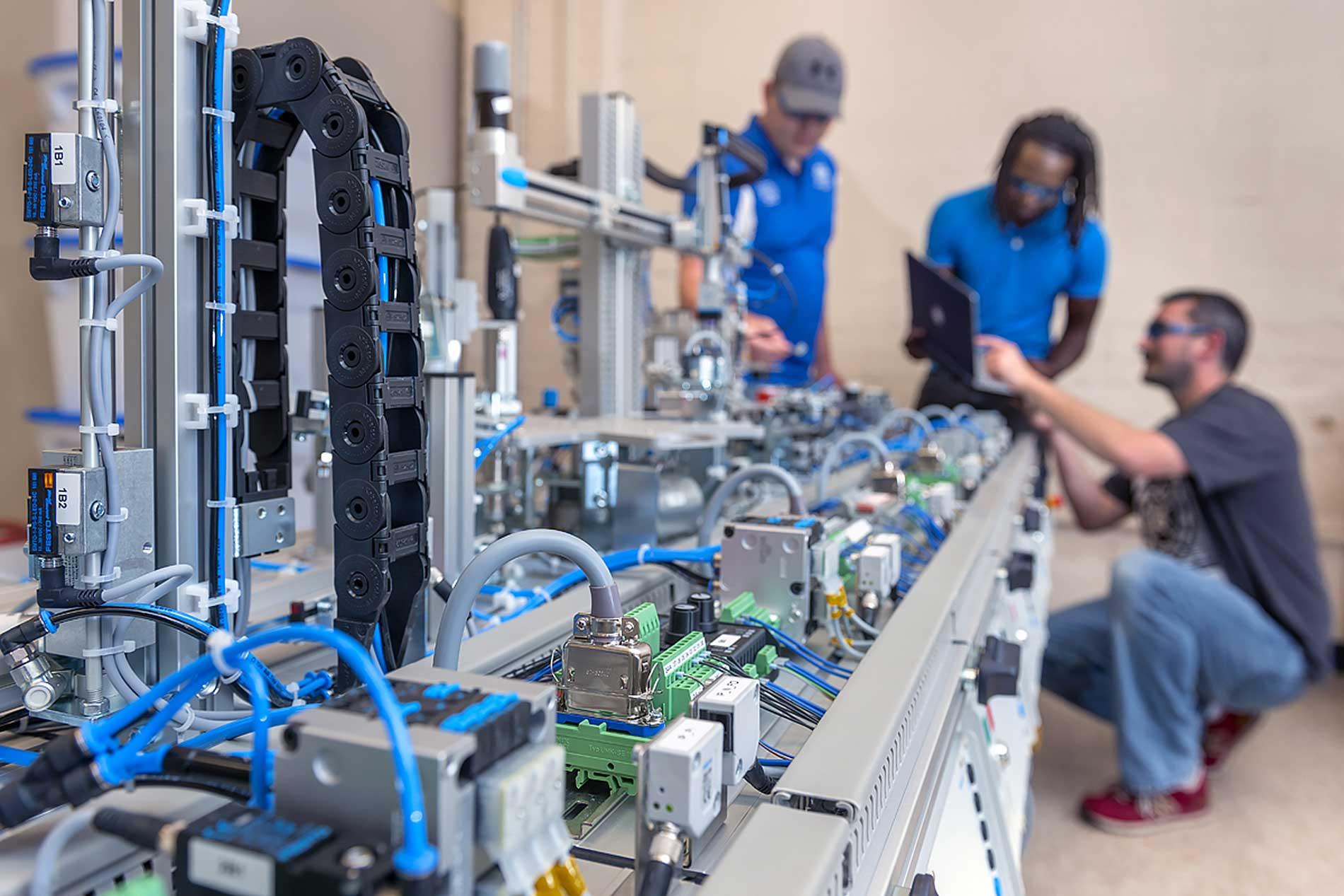
The Mechatronics Engineering degree combines knowledge and skills in mechanical engineering, electronics engineering, digital controls, computer programming, and project management to enable students to analyze and design automation and robotics systems used in today's advanced manufacturing environment.
This program emphasizes the latest techniques in systems approach in design and problem-solving, widely used in today's industry.
Mechatronics Engineering Degree
The Mechatronics Engineering, B.S. degree prepares students for engineering positions as automation system designers and project managers in various industries such as automotive, aerospace, advanced manufacturing, green energy, biotechnology, health care, homeland security and defense, and transportation and logistics.
Accreditation
The Mechatronics Engineering program is accredited by the Engineering Accreditation Commission of ABET, https://www.abet.org, under the commission’s General Criteria with no applicable program criteria.
Program Educational Objectives
Within a few years of graduation, a Mechatronics Engineering graduate will have the ability to:
- excel in careers in design, development, diagnostics, analysis, implementation, operation, optimization and/or management of mechatronics systems in a global marketplace.
- lead industry-based, cross-disciplinary automated or intelligent systems projects that are innovative and add value to their respective organization.
- continue in self-directed, continuing professional development as evidenced by attainment of professional licensure, graduate degrees, professional certifications, etc.
- serve as a mentor to the next generation of engineers or subordinates and act as a change agent in their respective organizations.
Student Outcomes
The following student outcomes support the program educational objectives listed above. Attainment of these outcomes prepares graduates to enter the professional practice of engineering.
- an ability to identify, formulate, and solve complex engineering problems by applying principles of engineering, science, and mathematics.
- an ability to apply engineering design to produce solutions that meet specified needs with consideration of public health, safety, and welfare, as well as global, cultural, social, environmental, and economic factors.
- an ability to communicate effectively with a range of audiences.
- an ability to recognize ethical and professional responsibilities in engineering situations and make informed judgments, which must consider the impact of engineering solutions in global, economic, environmental, and societal contexts.
- an ability to function effectively on a team whose members together provide leadership, create a collaborative and inclusive environment, establish goals, plan tasks, and meet objectives.
- an ability to develop and conduct appropriate experimentation, analyze and interpret data, and use engineering judgment to draw conclusions.
- an ability to acquire and apply new knowledge as needed, using appropriate learning strategies.
If you live in one of these states: AL SC; you may be able to attend MTSU at in-state rates under the Academic Common Market program.





News Briefs

MTSU on WGNS: New mechatronics master’s degree, tracking Midstate business confidence, defining job of an actuary [LISTEN]
Middle Tennessee State University representatives recently appeared on WGNS Radio to discuss a new mechatronics engineering master’s degree, the new Middle Tennessee Business Confidence Index and the promising actuarial science program. [ Read More ]
MTSU launches new master’s in Mechatronics Systems Engineering to boost tech workforce
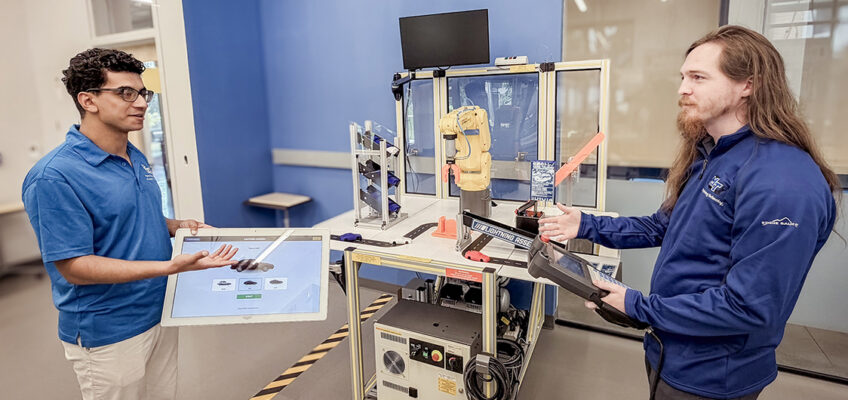
MURFREESBORO, Tenn. — Middle Tennessee State University has received approval to launch a new Master of Science in Mechatronics Systems Engineering, establishing a groundbreaking graduate program — the state’s first-ever master’s program in mechatronics — designed to prepare engineers for the future of advanced manufacturing, automation, robotics, and intelligent systems. The idea for the program was conceived [ Read More ]
News Briefs
MTSU on WGNS: New mechatronics master’s degree, tracking Midstate business confidence, defining job of an actuary [LISTEN]
Middle Tennessee State University representatives recently appeared on WGNS Radio to discuss a new mechatronics engineering master’s degree, the new Middle Tennessee Business Confidence Index and the promising actuarial science program. [ Read More ]
MTSU launches new master’s in Mechatronics Systems Engineering to boost tech workforce
MURFREESBORO, Tenn. — Middle Tennessee State University has received approval to launch a new Master of Science in Mechatronics Systems Engineering, establishing a groundbreaking graduate program — the state’s first-ever master’s program in mechatronics — designed to prepare engineers for the future of advanced manufacturing, automation, robotics, and intelligent systems. The idea for the program was conceived [ Read More ]


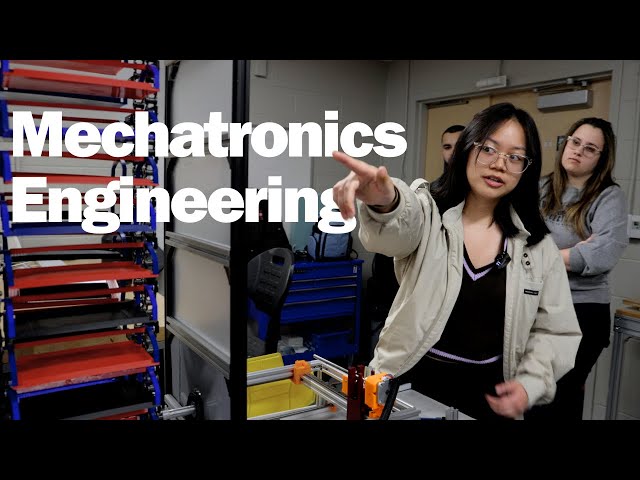









Mechatronics Engineering, B.S.
Current Job Titles of Mechatronics Engineering degree alumni
Mechatronics Engineering degree program is on the cutting edge of a fast-growing industry. Jobs are waiting for engineers to design and enhance robotics and automated systems. The design process of mechatronics combines mechanical, computer, and electrical engineering along with systems integration and technical project management. Unlike traditional programs, MTSU’s mechatronics has a systems approach, breaking the whole down into subsystems and then components, so that graduates can design products with a system in mind, not just one component. Automotive industry giants like Bridgestone, Nissan, and GM are hiring our graduates. Also, automation integrators such as Automation Nth, Spring Automation, and Fives International are interested in Mechatronics Engineering graduates. Finally, there is a large demand in logistics, distribution, and reverse logistics companies such as Assurant, FedEx, and Amazon that are actively recruiting at MTSU.
Our graduates are commonly employed as:
- Controls Engineer
- Product Design Engineer
- Electro-hydraulic Engineer
- Project Manager
- Test Engineer
- Industrial Engineer
- Applications Engineer
- Reliability Engineer
- Autonomous Vehicles Software Engineer
- Robotics Engineer
- Mechatronics Engineer
- Controls Design Engineer
- Quality Engineer
- Systems Engineer
- Field Service Engineer
Current Employers of Mechatronics Engineering degree alumni
- Boeing
- Amazon
- Universal Robotics
- Automation Nth
- Aerotek
- Powerhouse Controls
- Cyber Sciences, Inc
- Southeastern Technology
- Kasai North America
- Turner Machine Company
- Spring Automation
- The Davis Groupe
- Pro Charging Systems
- Shiloh Industries
- Schneider Electric
- Calsonic Kansei
- International Industrial Contracting Corporation
- Nyrstar
- Insequence Corporation
- Schwann Cosmetics
- TORC Robotics
- Nissan North America
- Bridgestone Tires
- Sun Hydraulics
- CEC Controls
- Integrated Control Systems
- Advanced Engineering
- OnTenn Automotive
- Murfreesboro Electric Department
- AO Smith Corporation
- Fuji Seal International, Inc
- Palmer DCS
- Advanced Technical Services
- Plastic Omnium
- Designed Conveyor Systems
- FR Drake Company
- Multimatic
- Feintool Group
- VEAPS, Inc
Graduate Study
Many alumni from the Mechatronics Engineering degree program have chosen to continue their education in graduate studies from these universities:
- M.S.P.S in Engineering Management at Middle Tennessee State University
- Ph.D. in Computational and Data Science at Middle Tennessee State University
- Ph.D. in Robotics Engineering at Worcester Polytechnic Institute
- M.S. in Physics at Johns Hopkins University
- Ph.D. in Mechanical Engineering at Arizona State University
MTSU’s Career Development Center
MTSU offers a comprehensive Career Development Center that serves students throughout the full student experience and beyond. They collaborate with faculty and staff to equip students with the tools to be marketable to the world of work and continuing education.
Students can schedule an appointment or check online resources and job boards at mtsu.edu/career.
Students can find current internship opportunities by talking to faculty and visiting the University job and internship board called Handshake.
Wondering what you can do with your major? Check out our What Can I Do with A Major In guides.


Student Enrollment Statistics
| Academic Year Enrollment Headcount | |||||
|---|---|---|---|---|---|
| 2019-20 | 2020-21 | 2021-22 | 2022-23 | 2023-24 | |
| Computer Engineering Technology | 71 | 73 | 74 | 97 | 91 |
| Electro-Mechanical Engineering Technology | 93 | 86 | 81 | 79 | 78 |
| Mechanical Engineering Technology | 151 | 155 | 139 | 127 | 143 |
| Mechatronics Engineering | 395 | 371 | 358 | 317 | 304 |
| Academic Year Degrees Awarded | |||||
| 2019-20 | 2020-21 | 2021-22 | 2022-23 | 2023-24 | |
| Computer Engineering Technology | 6 | 5 | 2 | 5 | 8 |
| Electro-Mechanical Engineering Technology | 22 | 8 | 7 | 8 | 17 |
| Mechanical Engineering Technology | 19 | 22 | 13 | 18 | 21 |
| Mechatronics Engineering | 59 | 59 | 64 | 51 | 54 |


CONTACT US